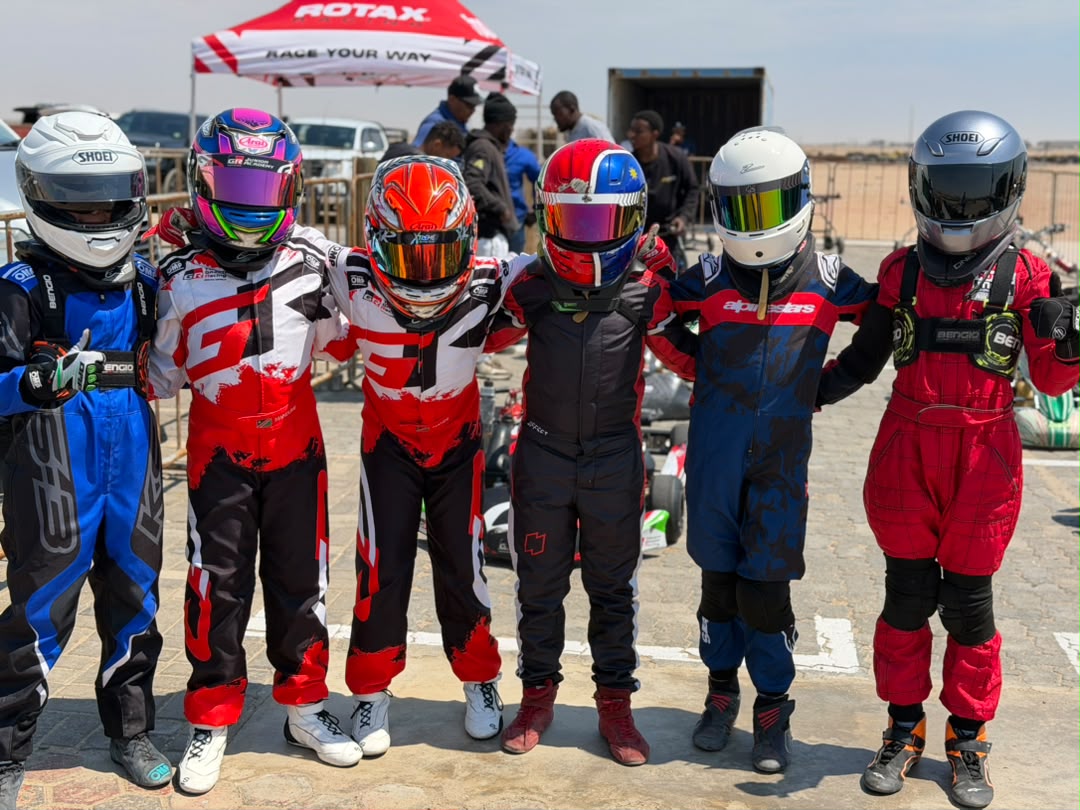
How do I start karting
GET STARTED IN KARTING
YOUR JOURNEY INTO MOTORSPORT STARTS HERE!
Welcome to the exciting world of kart racing in Namibia!
Have you ever dreamed of becoming a racing driver? Do you enjoy motorsport, speed and competition? Or are you a parent looking for an exciting sporting activity for your child?
Karting is one of the best ways to enter the world of motorsport. It is exciting, competitive and challenging, while teaching valuable skills such as concentration, discipline, confidence, sportsmanship and technical understanding.
Whether you are five years old or an adult discovering motorsport for the first time, there is a place for you in Namibian karting.
You do not need previous racing experience, and you do not need to own a kart to get started. The most important thing is having the passion to race!
Welcome to RMC Namibia – Rotax MAX Challenge Namibia, where future champions are made.
1. HOW DOES KARTING WORK?
Karting is essentially circuit racing on a smaller scale. Drivers compete against each other in purpose-built racing karts on dedicated karting circuits.
Although the karts are smaller than cars, the competition is every bit as serious. Drivers need to develop racing lines, braking techniques, acceleration control, race strategy and the ability to overtake safely.
A typical race meeting consists of:
- Free practice – Drivers learn the circuit and prepare their karts.
- Qualifying – Drivers compete for the best starting positions.
- Heats – Several races determine the starting order and championship points.
- Final – The main race where drivers compete for victory.
Karting is a sport for the entire family. Parents, children and adults can all become involved, whether as competitors, mechanics, supporters or volunteers.
2. WHERE CAN I START KARTING IN NAMIBIA?
The best way to start is to contact your nearest karting club or visit a local karting event.
Namibia has an established karting community, with activities and events taking place in different regions.
The RMC Namibia national championship provides a platform for drivers to compete at national level, bringing together competitors from across the country.
Our karting community includes:
- Swakop Karters – Swakopmund
- Windhoek Motor Club – Windhoek
- Walvis Bay Motor Club – Walvis Bay
Visit a race meeting, speak to drivers and parents, and find out which class would be most suitable for you.
You will find that the karting community is generally very welcoming and that experienced competitors are happy to help newcomers.
Our advice: Don’t buy a kart before speaking to someone who understands the sport.
3. WHAT IS RMC NAMIBIA?
RMC Namibia stands for Rotax MAX Challenge Namibia.
It is the national Rotax karting championship, providing drivers with the opportunity to compete in professionally organised national racing events.
The championship is based on the internationally recognised Rotax MAX Challenge concept, using controlled and sealed Rotax engines to ensure fair competition.
The focus is on driver ability, consistency and racing skills.
RMC Namibia offers drivers the opportunity to:
- Compete in national karting championships.
- Race against competitors from different regions of Namibia.
- Develop their driving skills through organised competition.
- Progress through different racing categories.
- Compete for championship titles.
- Qualify for international Rotax racing opportunities, subject to the applicable qualification rules.
The ultimate goal is to develop Namibian drivers and create opportunities for them to compete internationally, including at the Rotax MAX Challenge Grand Finals.
4. WHICH KARTING CLASS IS RIGHT FOR ME?
Karting offers different classes depending on the driver’s age, experience and type of kart.
The RMC Namibia national championship currently lists the following classes:
| Class | Age group |
|---|---|
| Bambino | 5–9 years |
| E10 Bambini | 7–11 years |
| E10 Mini | 10–13 years |
| Micro MAX | 7–11 years |
| Mini MAX | 9–13 years |
| Junior MAX | 12–14 years |
| Senior MAX | 14+ years |
| DD2 | 15+ years |
| DD2 Masters | 32+ years |
The Rotax E10 classes introduce young drivers to electric kart racing, while the traditional Rotax MAX classes use petrol-powered engines.
Age eligibility, class specifications and technical requirements are governed by the applicable championship regulations.
If you are unsure which class is suitable, contact RMC Namibia before purchasing equipment.
5. DO I NEED TO OWN A KART?
No! There are different ways to enter karting.
Option 1 – Start with a rental kart
This is a good way to experience karting before making a financial commitment. You can learn the basics, understand the racing environment and decide whether you want to take the next step.
Option 2 – Purchase a used kart
Many drivers start with a second-hand kart. This can be a more affordable way to enter competitive racing.
However, it is important to ensure that the kart is suitable for the class you intend to enter and complies with the current technical regulations.
Always ask an experienced driver or mechanic to inspect a used kart before purchasing it.
Option 3 – Purchase a new kart
If you are serious about competing, buying a new kart is another option.
Authorised kart dealers can assist with choosing the correct chassis, engine, seat, accessories and safety equipment.
Option 4 – Join a racing team or development academy
Joining an established racing team can make starting out much easier.
Teams can assist with kart preparation, mechanical support, coaching, training, transportation and race-day preparation.
For young drivers especially, professional guidance can make a significant difference.
6. WHAT EQUIPMENT DO I NEED?
Safety is extremely important in karting.
Every competitive driver must have the appropriate protective equipment in accordance with the applicable regulations.
Generally, the required equipment includes:
- Approved full-face racing helmet.
- Karting race suit.
- Racing gloves.
- Karting boots.
- Rib protector, where required or recommended.
- Other protective equipment applicable to the class.
You will also need access to basic kart maintenance equipment, including:
- Kart trolley.
- Basic tool set.
- Tyre pressure gauge.
- Fuel container for petrol-powered karts.
- Spare chains, sprockets and other essential parts where applicable.
If you are starting out, do not rush into purchasing everything immediately. Speak to your club or karting dealer first.
7. HOW OLD DO I NEED TO BE?
Karting is one of the few motorsport disciplines where children can start developing their racing skills from a very young age.
The Bambino category provides an introduction to competitive karting for young drivers, while the E10 electric categories offer another pathway for developing young talent.
As drivers grow older and gain experience, they can progress through the different categories towards the more powerful Rotax MAX engines.
There is also a place for adults in karting.
The Senior MAX, DD2 and DD2 Masters categories provide exciting racing opportunities for adult competitors.
It is never too late to discover kart racing!
8. HOW MUCH DOES KARTING COST?
Karting can be approached at different budget levels.
The total cost depends on the class, whether you purchase new or used equipment, and how frequently you intend to practise and race.
Typical expenses include:
- Kart and engine purchase or rental.
- Racing equipment.
- Club membership.
- Motorsport licence.
- Race entry fees.
- Tyres and fuel, where applicable.
- Maintenance and spare parts.
- Transportation and accommodation for away events.
There are also opportunities to join teams or enter rental and development programmes, which may reduce the initial investment required.
We recommend preparing a budget before purchasing your first kart.
Contact RMC Namibia or an authorised kart dealer for current pricing and available packages.
9. DO I NEED A RACING LICENCE?
Yes. Competitive kart racing is regulated motorsport.
Drivers must comply with the requirements of the Namibia Motorsport Federation (NMSF), including the applicable competition licence, club membership and event entry requirements.
The relevant requirements depend on the event and championship.
The organiser will guide you through the registration process and explain the documentation required before your first race.
All national karting events are conducted under the applicable NMSF regulations and the supplementary regulations issued for each event.
10. WHERE CAN I FIND THE RULES AND REGULATIONS?
Karting is governed by sporting and technical regulations to ensure fair competition and safety.
These regulations cover matters such as:
- Kart and engine specifications.
- Driver eligibility and age groups.
- Safety equipment.
- Minimum weights.
- Tyre regulations.
- Race procedures.
- Technical inspections.
- Championship scoring.
RMC Namibia publishes the relevant championship information and regulations.
Always make sure you are using the latest applicable regulations before purchasing equipment or entering a race.
11. HOW DO I PREPARE FOR MY FIRST RACE?
Your first race meeting can be an exciting experience, but preparation is important.
We recommend the following:
Before race day:
- Make sure your kart is mechanically sound.
- Check your tyres, brakes, steering and chain.
- Ensure your safety equipment is in good condition.
- Complete your entry and licensing requirements.
- Arrive early at the circuit.
At the circuit:
- Familiarise yourself with the track layout.
- Attend the compulsory drivers’ briefing.
- Listen carefully to the officials.
- Learn the meaning of the different racing flags.
- Understand the starting procedures.
- Ask experienced drivers for advice.
Remember, your first race is about learning and gaining experience.
Do not worry about being the fastest driver on the track. Concentrate on driving smoothly, safely and consistently.
12. TIPS FOR BEGINNER DRIVERS
Every successful racing driver started somewhere.
Here are a few tips to help you develop:
- Learn the correct racing line.
- Concentrate on smooth driving rather than outright speed.
- Brake consistently and avoid sudden movements.
- Look ahead instead of focusing only on the kart in front of you.
- Respect other competitors.
- Listen to your coach and mechanics.
- Learn how your kart reacts to different track conditions.
- Be patient and improve one step at a time.
Practice makes progress. Consistency is often more important than one exceptionally fast lap.
Most importantly, enjoy the experience!
13. FROM LOCAL RACING TO INTERNATIONAL COMPETITION
Karting is internationally recognised as one of the most important development platforms in motorsport.
Many professional racing drivers started their careers in karting.
Through RMC Namibia, local drivers have the opportunity to compete for national championship honours and international qualification opportunities.
The Rotax MAX Challenge Grand Finals bring together the best qualifying drivers from countries around the world.
It is an opportunity to represent Namibia on an international stage.
Dream big. Start racing. Represent Namibia!
NOW YOU ARE READY!
YOUR RACING JOURNEY STARTS HERE.
Whether you are a young driver taking your first steps into motorsport, an experienced racer looking for a new challenge, or a parent wanting to introduce your child to karting, we welcome you to the Namibian karting community.
Get in touch with RMC Namibia, visit your nearest karting club and come experience the excitement of kart racing.
RMC NAMIBIA – RACE YOUR WAY!
CONTACT RMC NAMIBIA
Website: www.rmc-namibia.com
Email: service@kartstore-namibia.com
Phone / WhatsApp: +264 81 149 4088
JOIN THE GRID. START YOUR JOURNEY. BECOME A CHAMPION.